Crypto / YMYL
From HCU Casualty to 95K Monthly Organic Visits: Rebuilding a Crypto Media Site
+220% organic traffic · Full HCU recovery · 12 topic clusters with ranking dominance
The Challenge
A crypto media site came to me eight months after the September 2023 Helpful Content Update. First, they had built their traffic on high-volume news content. Freelance writers. Fast turnaround. Also, broad coverage across every altcoin and regulatory story.
Then the HCU hit. Traffic dropped 70% from peak. Furthermore, later core updates kept grinding the site lower. Because the old model was "news arbitrage at scale," Google spent 2023 and 2024 systematically tearing it down. So by the time they reached out, the site had been bleeding for months.
Also, the team was in denial. For example, they kept publishing at the same pace. Meanwhile, every new post added to the accumulated bloat. Therefore, the first conversation was not about strategy. Instead, it was about facing what had gone wrong.
What I Found in the Audit
Five findings shaped the whole plan.
First, 1,400 articles sat on the site. Roughly 900 of them had earned fewer than 50 organic visits in the past six months. Because they were not helping users, they were not helping the site either. In fact, they were hurting it.
Next, the topical sprawl was extreme. The site covered every altcoin, every exchange, every news headline. Meanwhile, there was no depth anywhere. Therefore, Google could not tell what the site was about.
Also, no real expertise existed on the site. Writers had Twitter accounts and little else. So in a YMYL space, that was not enough. Furthermore, "has a Twitter account" is not a credential Google trusts on money topics.
Then came the duplicate coverage problem. The site had six articles on one ETF approval story. Each covered the same ground with slightly different framing. As a result, they cannibalized each other. In other words, no single page was strong enough to rank.
Finally, crawl budget was wasted on low-value archives. Tag pages. Author pagination. Date-based archives. Because Google kept crawling this junk, it had less bandwidth for pages that mattered.
The Strategy
The thesis was hard but clear. First, cut most of the site. Then, rebuild what remains around real expertise and narrow topical depth. Finally, stop chasing every news cycle. Instead, own a specific set of topics with real authority. Furthermore, do it in the right order.
Content Pruning
This was the hardest part of the work. First, I flagged 900 posts that had earned fewer than 50 visits in six months. Next, I ran a second review to split useful evergreen content from expired news coverage. Also, I mapped each flagged post to a decision category.
Then the cuts came. First, 900 posts got noindexed and pulled from internal linking. Next, 300 were deleted outright with 301 redirects to relevant category parents. After that, 200 were merged into full evergreen resources. For example, 14 separate ETF articles became one updated ETF tracker page.
So the site went from 1,400 articles to around 400. However, the 400 that remained were the ones that could rank and keep users on site. Furthermore, crawl budget started flowing where it mattered.
Topical Restructuring
Next, I narrowed the editorial focus. Before, the site had tried to cover all of crypto. That was the problem. Therefore, I picked 12 clusters where the site had real equity or could build depth.
For example, these included DeFi protocols, Layer 2 networks, stablecoins, regulation, on-chain data, and asset research. Also, each cluster got a pillar page and a mapped set of supporting articles. Then internal linking was rebuilt around the cluster structure. So every piece of content had a clear home and purpose.
E-E-A-T Rebuild
Because this is YMYL, trust was non-negotiable. First, I brought on three named writers with real backgrounds. One was a former SEC analyst. Also, another was a published DeFi researcher. Finally, the third was a full-time on-chain analyst with a track record on public dashboards.
Next, credentials were cited in every byline. Also, each writer got a dedicated author page with LinkedIn, published work, and relevant credentials. Therefore, Google could connect every financial claim on the site to a real person with a real background.
Technical SEO
Alongside the content work, I handled the technical gaps. First, the noindexed 900 plus the deleted 300 freed up massive crawl budget. Next, I cleaned up faceted archives, tag pages, and date-based URLs that had been eating resources.
Then I rebuilt internal linking to match the new cluster structure. Also, I rolled out Article, Author, and FAQ schema across the rebuilt content. So Google had clear structured signals for every page that mattered.
The Results
After nine months, the numbers told the story.
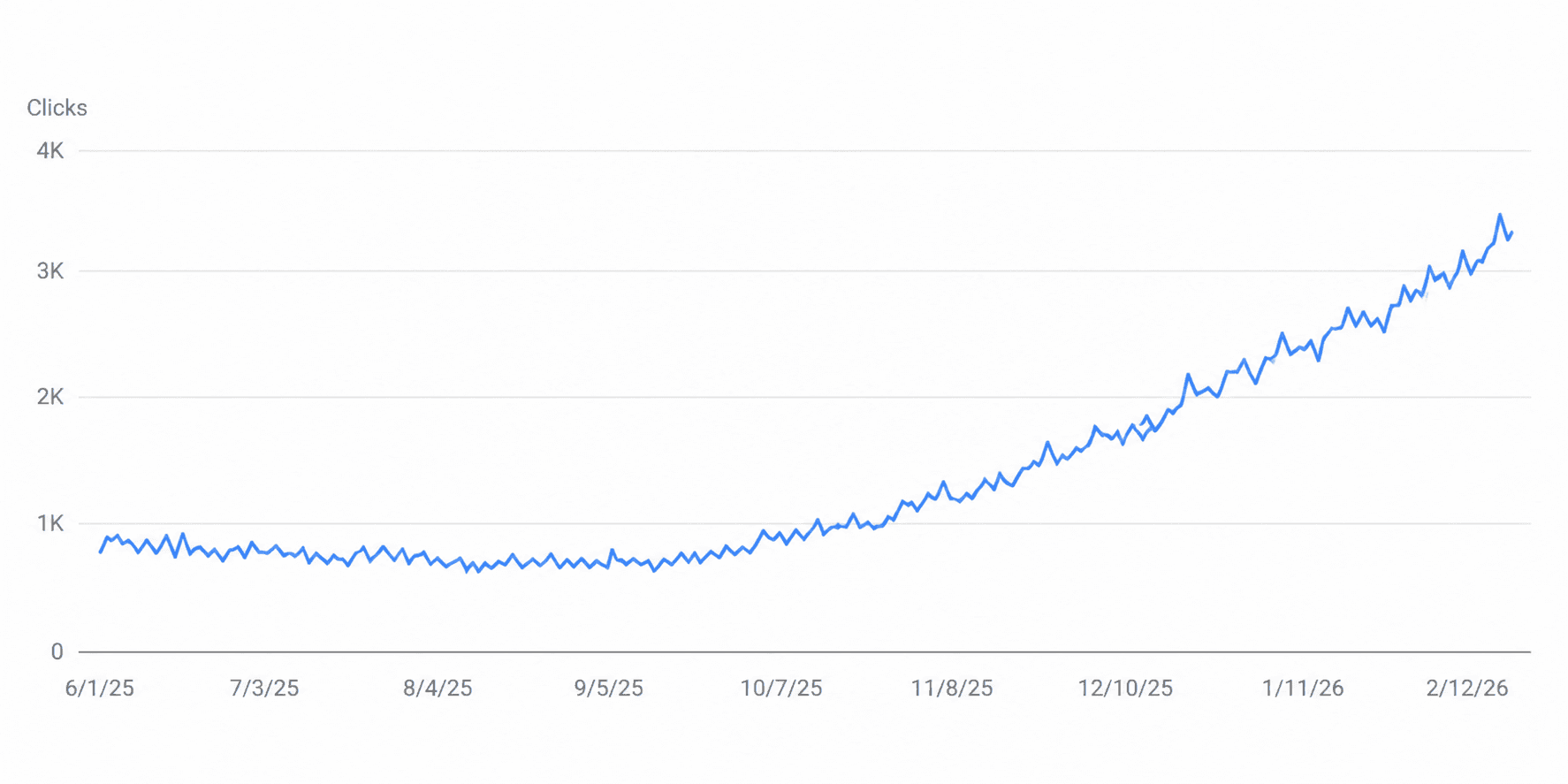
First, organic traffic grew by 220% from the post-HCU low. Next, monthly visits climbed from 28,000 to 95,000. Also, the site passed its pre-HCU peak by month eight. In other words, the recovery was not just complete. Furthermore, it went past the level before the update had even hit.
Then the 12 topic clusters started winning their spaces. Each one held page 1 rankings for its main commercial and informational queries. Also, the site became a source for crypto writers and researchers. Because the pruning had cleared the noise, the content that remained earned real visibility.
Moreover, the site held up through two more core updates during the engagement. Both were net-positive. Therefore, the rebuilt base proved it could last over time.
What This Means for You
If your site was hit by the Helpful Content Update, the lesson here is hard. First, the fix is not writing "more helpful" posts on top of the old ones. Instead, the fix is facing what you were wrong to publish and cutting it.
Also, most HCU-hit sites are carrying hundreds of posts that are pulling the rest of the site down. Therefore, pruning is the fastest recovery tool available. Furthermore, narrower topical focus almost always beats broader coverage in the post-HCU world. In fact, the math works in your favor once you commit to it.