Ecommerce
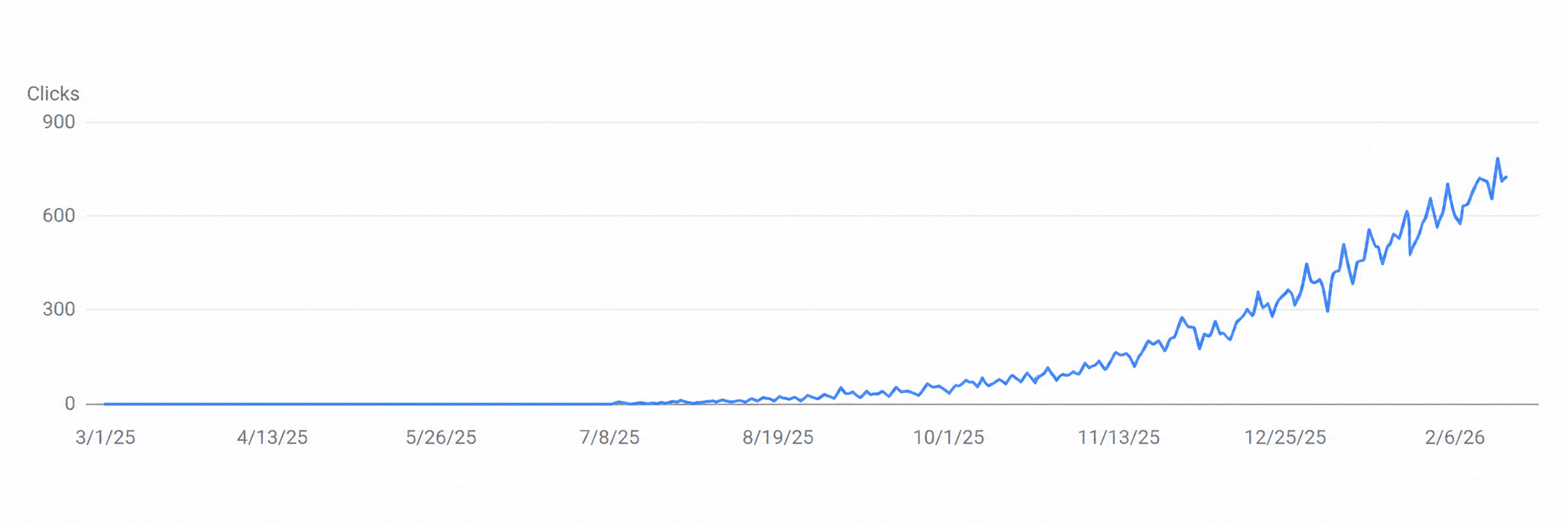
From 0 to 22,000 Monthly Organic Visitors in 12 Months for a New Matcha Brand
Brand-new domain · 0 to 22K organic · profitable by month 7
The Challenge
A new DTC matcha brand came to me before launch. Fresh domain. Zero backlinks. No history with Google. Therefore, everything had to be built from scratch.
The founder was technical. In fact, he knew SEO mattered.
Also, the niche was brutal. Since 2022, matcha has been an SEO gold rush. Meanwhile, established players had five years of content, strong backlink profiles, and real branded demand. In addition, most of them were well funded. So the real question was hard. How do you beat sites that started a decade ahead of you?
What I Found in the Audit
Because the site was pre-launch, this was less an audit and more a plan. Still, four findings shaped the work.
First, the Shopify theme was fine. It was Dawn-based. Clean code. Also, Core Web Vitals were solid out of the box. However, it shipped without schema, breadcrumbs, or proper canonical logic. Therefore, those had to go in before any content went live.
Next, the content gap was obvious. Every top-10 competitor talked about grades. Ceremonial. Culinary. Premium. Meanwhile, almost no one owned "matcha for [use case]" queries. For example, matcha for iced drinks, for baking, for pre-workout, or for specific dietary niches. So that was where the traffic was hiding.
Also, branded demand was zero. Because the site had no history, topical authority had to compound over time. Therefore, I planned for four to six months before rankings would start stacking. Furthermore, this was a long game from day one.
Then came the key finding. Before writing a single word, I ran a full SERP and TF-IDF analysis. For every target commercial query, I pulled the top 10 ranking URLs through a content analysis API. After that, I scraped the rendered HTML, extracted the body copy, and ran TF-IDF plus NLP entity scoring across each SERP.
The pattern was counterintuitive. First, the top-ranking pages for "ceremonial matcha" queries had three to four times more topical depth on origin, harvest, and shading duration than on taste or preparation. In contrast, "culinary matcha" rankers were dominated by recipe and use-case terminology. So most competitor product pages were writing the same generic copy on every SKU. As a result, they were not matching SERP intent. However, the TF-IDF scores told me exactly how much coverage each entity cluster needed. No guessing. Just measured against what Google was already rewarding.
The Strategy
The thesis was clear. First, build the technical foundation before launch. Then, use the TF-IDF data to write pages that match SERP intent by design. Finally, own the use-case angle competitors had ignored.
Technical SEO
Before launch, I shipped Product, Organization, Breadcrumb, FAQ, and HowTo schema. Next, I set up a clean URL structure with proper hreflang between the US and UK versions. Also, I built image optimization into the upload workflow. So no one would ever push a 2MB product shot to production.
On-Page and the TF-IDF Template
First, every PDP was written against the TF-IDF template from the SERP analysis. For ceremonial pages, that meant more depth on origin, harvest, shading, and cultivar. In contrast, for culinary pages, it meant more coverage of use cases, pairings, and preparation. Also, each SKU got specific coverage on Japanese farm regions, cultivar names, and USDA organic specifics. In other words, the pages matched what top rankers were covering. Then, they pushed slightly past on underserved entities.
Also, I built a "matcha finder" tool. It worked as a quiz for the user. Meanwhile, it doubled as an internal linking engine that routed visitors into the right commercial collection.
Content and Topical Authority
Instead of the typical 200-post content farm, I published a tight 40-article cluster around matcha use cases. Also, each piece was mapped to a specific commercial target. For example, "best matcha for lattes" linked into the ceremonial collection. Similarly, "matcha baking guide" linked into culinary SKUs. Therefore, every article had a clear commercial destination.
Long-tail queries did the heavy lifting. Because competitors were ignoring "how to" and "best matcha for [X]" variations, those pages ranked fast on a young domain. Furthermore, the competition on those terms was weak.
E-E-A-T, Light Touch
Matcha is not YMYL. However, trust still matters for ecommerce. So I built a founder-led About page. Then I added sourcing stories from the actual Japanese farms. Also, each content piece ran under a named author bio. In addition, product pages linked to supplier information and certification details.
The Results
After 12 months, the numbers were clear.
First, organic visits went from zero to 22,000 per month. Then, from month six onwards, growth ran at 130% quarter over quarter. Also, the site hit profitable blended CAC by month seven. That was ahead of the founder's original plan.
In addition, 380 keywords ranked on page 1. Of those, 14 were commercial head terms. In other words, the site was not just capturing informational searches. Instead, it was capturing buyers at the bottom of the funnel too.
Moreover, the TF-IDF approach paid off on a subtle level. Because the PDPs matched SERP intent by design, they started ranking without heavy internal linking pressure. So the content cluster and the commercial pages supported each other from month three onwards.
What This Means for You
If you are launching a new ecommerce brand, the lesson here is simple. First, SEO from day one is cheaper than SEO after the fact. Next, fix the foundation before launch. Then, use real SERP data instead of keyword tool guesses. Finally, publish tight content clusters with clear commercial destinations.
Also, ignore the advice to publish hundreds of blog posts. In fact, quality wins in a competitive niche. Therefore, 40 well-targeted articles, measured against what the SERP actually rewards, will beat 200 generic posts every time.