Ecommerce
From 30 Monthly Sales to 500 in 4 Months: Rebuilding a Niche Perfume Brand's SEO
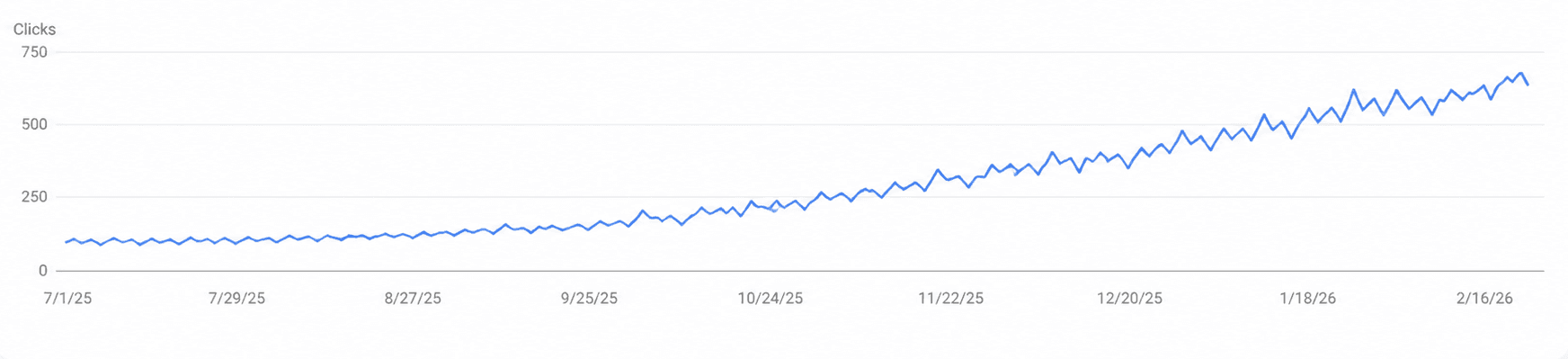
+850% ROI · +380% monthly organic clicks · +50% YoY monthly sales minimum
The Challenge
A mid-size online perfume retailer came to me. They had strong brand recognition in their niche. Also, they had 1,200 SKUs and a healthy email list. However, organic was basically an afterthought.
Paid ads were carrying the business. Meanwhile, organic traffic brought in roughly 30 sales per month. Because most of those were brand-term survivors, the channel looked dead from a new-customer angle. So the founder had a clear question. Was there room to grow, or was SEO just a cost center?
Also, the tech stack was fine on the surface. It was a clean Shopify setup. Therefore, the old agency kept saying things were "SEO-ready." However, the SERPs told a different story. First, the top commercial queries were owned by bigger players. Next, the brand was invisible on most category-level searches. Furthermore, as a result, paid CAC kept climbing every quarter.
What I Found in the Audit
Five findings shaped the whole plan.
First, 340 product pages shared the manufacturer's boilerplate description word-for-word. That is thin and duplicate content at scale. Because Google cannot differentiate identical copy across hundreds of SKUs, most PDPs were invisible in search.
Next, there was no structured data. No Product schema. No review schema. Also, no breadcrumbs. So Google had no structured signal to work with. In other words, the site was competing blindfolded.
Then, category pages were underbuilt. The top collection pages like "woody fragrances" or "oud perfumes" had 80-word intros. Meanwhile, they relied on product grid text to rank. However, competitors were running 1,500-word category pages with real editorial content.
Also, internal linking was flat. Every page sat two clicks from home. Furthermore, there was no topical hierarchy. Therefore, link equity pooled on the homepage and never flowed into category or product pages.
Finally, 170 discontinued SKUs returned soft 404s. Instead of redirecting to relevant category parents, those pages sat in a broken state. As a result, the site was leaking crawl budget and accumulated link equity into dead ends.
The Strategy
The thesis was clear. First, fix the technical foundation. Then, rewrite product and category pages around real SERP intent. Finally, build topical depth that supports commercial rankings, not vanity blog traffic.
Technical SEO
First, I rolled out Product, AggregateRating, and Breadcrumb schema across every PDP. Next, I built a redirect map for the 170 discontinued SKUs, routing each to its closest category parent. Also, I fixed faceted navigation indexation by canonicalizing filter combinations. So Google now crawls the right URLs and ignores the junk.
In addition, I cleaned up the XML sitemap. Then I pushed it through Search Console and confirmed index coverage jumped within two weeks.
On-Page and PDPs
Next came the PDP rewrite. First, I targeted the top 200 product pages. Each page got original copy covering scent notes, olfactory family context, wear-time notes, and longevity data. Also, every PDP gained a "compare to" block that pulled in two to three related products. Therefore, that block solved two problems at once. First, it gave buyers context. Second, it fixed the flat internal linking by routing equity between related SKUs.
Because fragrance buyers care about specific notes, I made sure each PDP answered the real questions. For example, how does it open? Then what does it dry down to? Also, how long does it last on skin? Furthermore, how does it compare to a classic reference in the same family? So the copy matched real buyer intent instead of marketing fluff.
Content and Topical Authority
Then I built a "Fragrance Knowledge" hub. It covered beginner guides to olfactory families, note breakdowns, and niche-versus-designer explainers. Each guide linked into a relevant category or collection page. Therefore, every piece of content had a commercial destination.
Also, I avoided the generic "best perfume for X" content farm trap. Instead, the cluster was tight. Forty guides, each earning its spot in the architecture.
Category Architecture
This was where the TF-IDF work came in. Each category page rewrite was guided by a TF-IDF and NLP entity analysis of the top 10 ranking pages for its primary query. Therefore, the topical coverage and entity depth matched what the SERP was actually rewarding. No guesswork.
First, I rewrote 40 category pages with 600 to 900 word intros. Next, I added comparison tables and curated subsections like "Best for summer" or "Best under €200." Also, each section linked down into specific products. So the page served both the search intent and the buying path at the same time.
The Results
After eight months, the numbers were clear.
First, organic leads went from 30 to 500 per month in just four months. That is a 1,566% lift. Moreover, the growth held. Leads kept climbing through the full engagement.
Next, monthly organic clicks grew by 380%. Also, monthly organic sales landed at a minimum of 50% above prior year. Some months hit 80% year-over-year.
In addition, the engagement delivered roughly 850% ROI over eight months, measured on client-reported organic revenue. Furthermore, paid CAC dropped for the first time in two years. Because organic was now pulling real weight, the founder could shift budget where it mattered.
Also, the TF-IDF work on category pages paid off on a subtle level. Those pages ranked faster than the blog content, because they matched SERP intent by design. So the commercial engine started earning traffic before the content hub had fully compounded.
What This Means for You
If you run a Shopify store, the lesson here is simple. First, most stores are leaving five to ten times more organic revenue on the table because nobody ever touched the PDPs. Next, manufacturer boilerplate is a silent killer. Also, category pages are not just landing pages. They are your most important real estate for commercial intent.
Moreover, TF-IDF and real SERP analysis beat keyword tool guesses every time. Therefore, if you are relying on volume and difficulty scores to pick keywords, you are missing the deeper signal. Google is already telling you what to write. You just have to measure it.