B2B SaaS
How I Grew a B2B SaaS Platform's Organic Traffic by 140% and Tripled Demo Requests in 9 Months
+140% organic traffic · 8K to 19K monthly visits · +220% demo requests from organic
The Challenge
A Series B B2B SaaS platform came to me under pressure. First, they had a strong product. Also, they had solid paid acquisition. However, CAC had been climbing for four straight quarters. Therefore, the board was asking hard questions about runway and burn.
Also, the marketing team was burned out. For months, they had pushed out three to four blog posts a week. Traffic grew slowly. Meanwhile, demo requests from organic stayed flat. In other words, the content was failing on revenue.
So the founder had hit a wall. Because paid was stuck at diminishing returns, he needed organic to start pulling weight. However, the setup was broken. Blog posts ranked for thin informational queries. Readers landed, nodded, and bounced. Furthermore, the team had no way to capture buyers ready to purchase.
Then came the hardest hit. A larger competitor had started ranking for every commercial query that mattered. Comparison pages. Alternative pages. Integration searches. Therefore, every month of delay was a lost deal. In fact, the gap was widening fast.
What I Found in the Audit
Five findings shaped the whole plan.
First, 400 blog posts ranked for thin informational queries that almost never converted. In fact, the top 20 traffic pages drove 0.3% of demos. Because the content came from surface-level keyword research, it attracted the wrong audience. So visitors read, nodded, and bounced. Furthermore, most were never going to buy.
Next, the site had zero pages for commercial intent. No "[competitor] alternatives." No "[competitor] vs [client]." No "[category] software for [vertical]" pages. Also, no integration landing pages. Therefore, the buyers ready to purchase were lost to competitors by default.
Then, use-case pages existed but were weak. They read like product marketing collateral. Feature lists. Stock imagery. No search intent match. As a result, they failed on rankings. Furthermore, they failed on conversion too.
Also, the backlink profile was unusually healthy for the stage. Wide anchor distribution from major product review sites, integration partner mentions, podcast features, and editorial links. Because the brand had done right by partners and press, the profile could absorb a more aggressive commercial anchor campaign than most SaaS sites.
Finally, internal linking was blocked inside the blog. Links flowed into blog posts and died there. Product pages and the pricing page got almost nothing. As a result, link equity was buried in content that did not drive revenue.
The Strategy
The thesis was direct. First, build the commercial pages that buyers actually search for. Then, rewire the site so link equity flows into revenue pages. Finally, use the strong backlink profile to push harder on commercial anchors than most SaaS sites can safely attempt.
Technical SEO
First, I rolled out SoftwareApplication schema on product pages. Next, FAQ schema on high-intent pages. Also, Organization markup with sameAs links to major review platform profiles.
Then I fixed a canonicalization issue where /features/ and /product/ URLs were competing for the same terms. So each section had one clear canonical home for each topic.
Bottom-of-Funnel Pages
This was where the real work started. First, I built the missing commercial page templates. Competitor alternative pages. Head-to-head comparison pages. "Best [category] software for [vertical]" pages. Also, integration landing pages, one per major partner, 30 total.
Next, each page was built around real search intent. Schema. Social proof. Clear CTA. Also, specific use-case examples pulled from real customer outcomes. Therefore, a buyer searching for "[competitor] alternatives" no longer lost their path to a competitor. Instead, they landed on a page that answered the question.
Content Pruning and Clustering
Then came the painful part. I pruned 140 low-value blog posts. Some were merged into fuller resources. Others were deleted with 301 redirects. After that, the remaining content was restructured into 8 clusters tied to product use cases.
Furthermore, each cluster ended at a commercial landing page. So readers finishing a blog post found a clear next step. Therefore, the blog stopped being a dead end.
Link Building and Digital PR
Because the anchor profile was wide and natural, I ran a more commercial campaign than is typical for SaaS. Three channels did the work. First, guest posts on vertical-specific publications with partial-match anchors pointed at commercial pages. Next, digital PR around original data studies pulled from anonymized product data.
Also, integration partner co-marketing filled the third channel. Mutual links with complementary SaaS tools. Therefore, every link came from a real context that Google could verify. Furthermore, I reclaimed 60 unlinked brand mentions from review roundups.
Programmatic SEO, Light Touch
Next, I built a templated "[Integration A] + [Integration B] for [use case]" page generator. The data came from existing integration docs. First, I launched 120 pages. Then after a three-month review, I kept the top 70 performers. Also, I noindexed the rest. So the programmatic layer stayed clean.
The Results
After nine months, the numbers told a different story than the one the founder had feared.
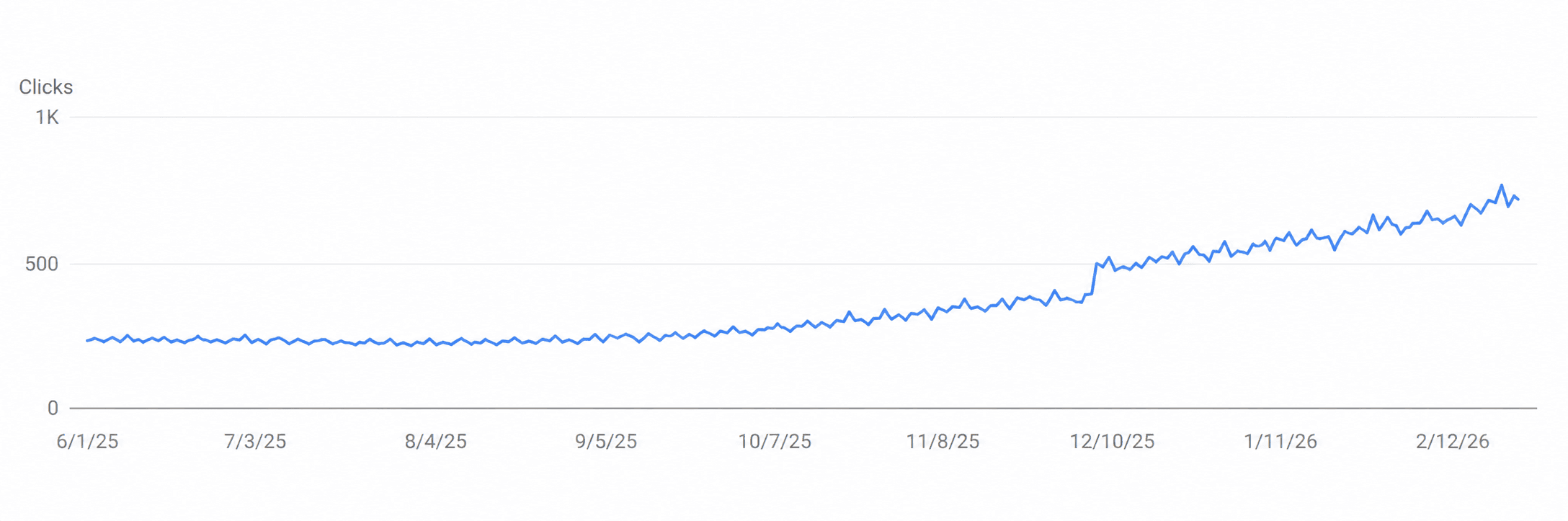
First, organic traffic grew from 8,000 to 19,000 monthly visits. That is a 140% lift. However, traffic was the easy part. The real win was that demo requests from organic grew by 220%. In other words, the channel finally started pulling revenue weight.
Next, the site took page 1 for 28 commercial "[category] software" and "[competitor] alternative" terms. Also, integration landing pages drove a steady flow of mid-funnel visitors who converted three times better than blog traffic. Therefore, the team could point to organic as a proven channel. Furthermore, they no longer lost deals to competitors on commercial searches.
Moreover, the programmatic pages earned their keep. They drove 18% of total organic demos within six months of launch. Because they answered specific buyer questions at scale, they worked. Furthermore, CAC dropped for the first time in over a year. So the board pressure eased.
What This Means for You
If you run B2B SaaS, the lesson is simple. First, most SaaS SEO is content marketing in disguise. Traffic grows. The CMO is happy. Meanwhile, nobody books a demo. Therefore, the fix is often boring but effective. Build the pages buyers actually search for when they are ready to purchase.
Also, do not let your blog trap your link equity. Instead, rewire internal linking so commercial pages get support. Furthermore, if your backlink profile is strong, use it. In fact, a wide natural anchor distribution is an asset most founders waste.